
Bielefeld, June 18, 2026 – For the eighth time, the Hinterland of Things conference in Bielefeld brought together over 2,000 innovators and trendsetters from Germany’s technology scene and business community. Under the motto “and ACTION,” the Bielefeld Stadthalle once again served as a platform for the issues currently shaping Germany and Europe: sovereignty, capital, transformation, DeepTech—and the question of who will lead the next wave of growth.
Those sitting on the Hinterland Stage didn’t hear lengthy analyses of everything that’s going wrong. Instead, the focus was on what needs to be done now. The answers were clear, concrete, and not always comfortable.
To bring the day’s key themes to life, we’ve highlighted a few soundbites from the panel discussions and interviews on stage.
6 topics that set the tone:
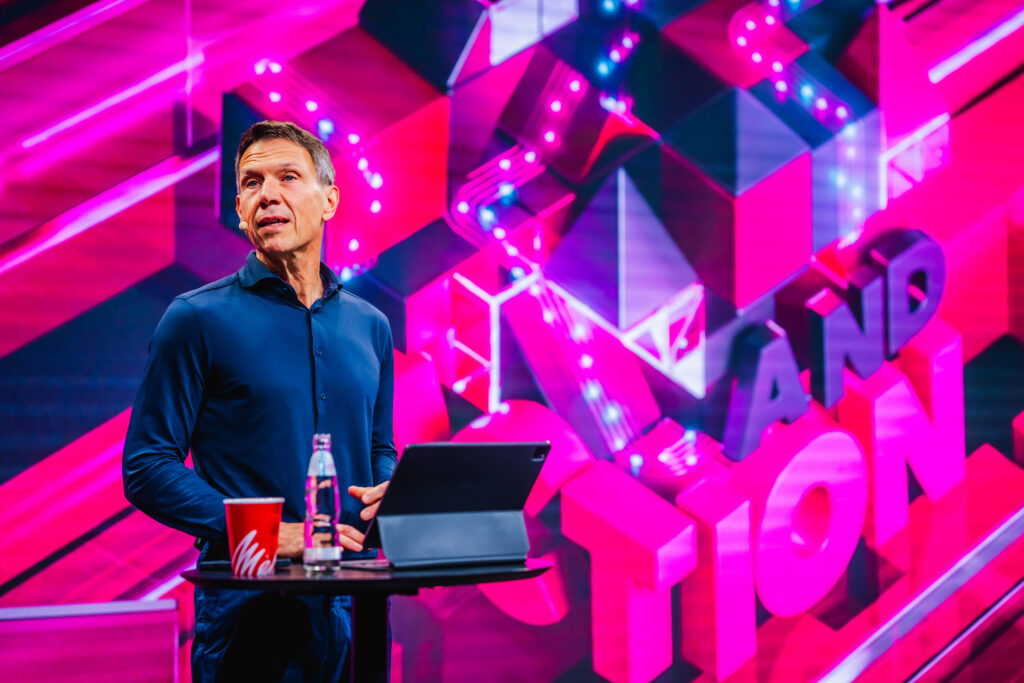
René Obermann, Managing Director at Warburg Pincus and former CEO of Deutsche Telekom, delivered the most pointed opening remarks of the day. In his keynote address on the fundamental elements of European sovereignty, he left no room for interpretation: “For decades, we in Europe have been shooting ourselves in the foot through risk aversion and overregulation.” He continued: “Europe has the money, the industry, and the technology to free itself from these dangerous dependencies. What we lack is the collective social and political will—and the resolve—to move beyond military parochialism in Paris, Berlin, and elsewhere in Europe.”
Obermann made it clear: “Sovereignty does not mean self-sufficiency. That is a major misunderstanding. Self-sufficiency would be naive and harmful.” What is needed, according to Obermann, is an integrated European strategy with capital that actually flows into key technologies and a political will that transcends national borders.
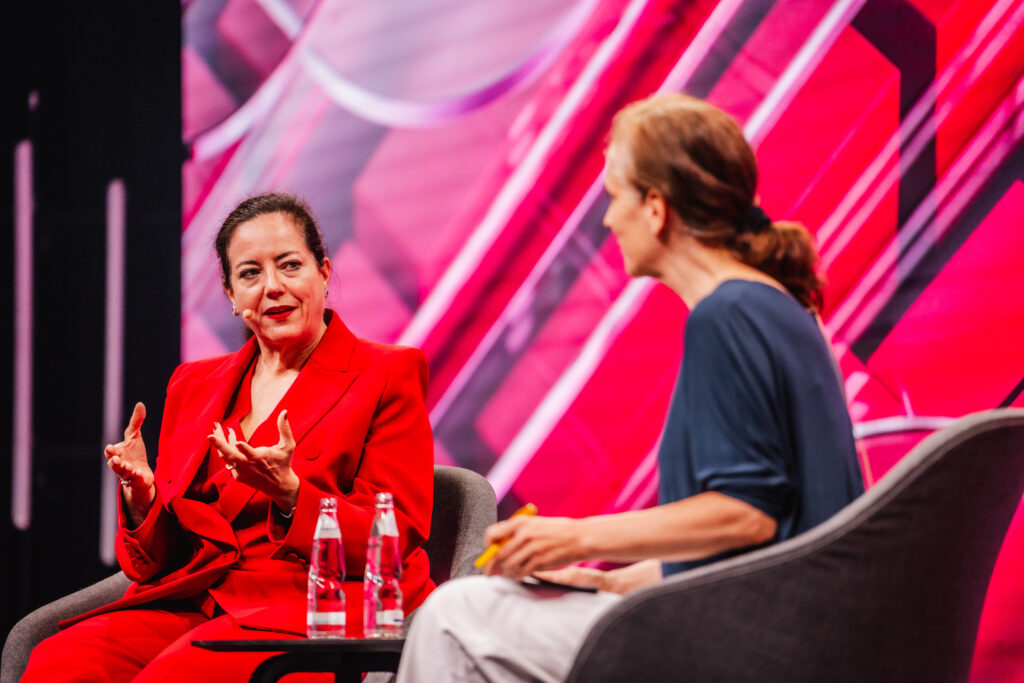
Isabel Knauf added a small-business perspective to the discussion in an interview with Petra Gessner (FAZ). Her conclusion: Germany’s strength lies in its adaptability—but only if that adaptability is actually put to use. “Using AI doesn’t just mean further digitization; it means redefining all processes.” And with regard to geopolitical shifts: “In the medium term, we will no longer be able to export cars to America. In the medium term, we will no longer be able to ship cars to China. And then we’ll have to consider: What does that mean for our structures in Germany?”
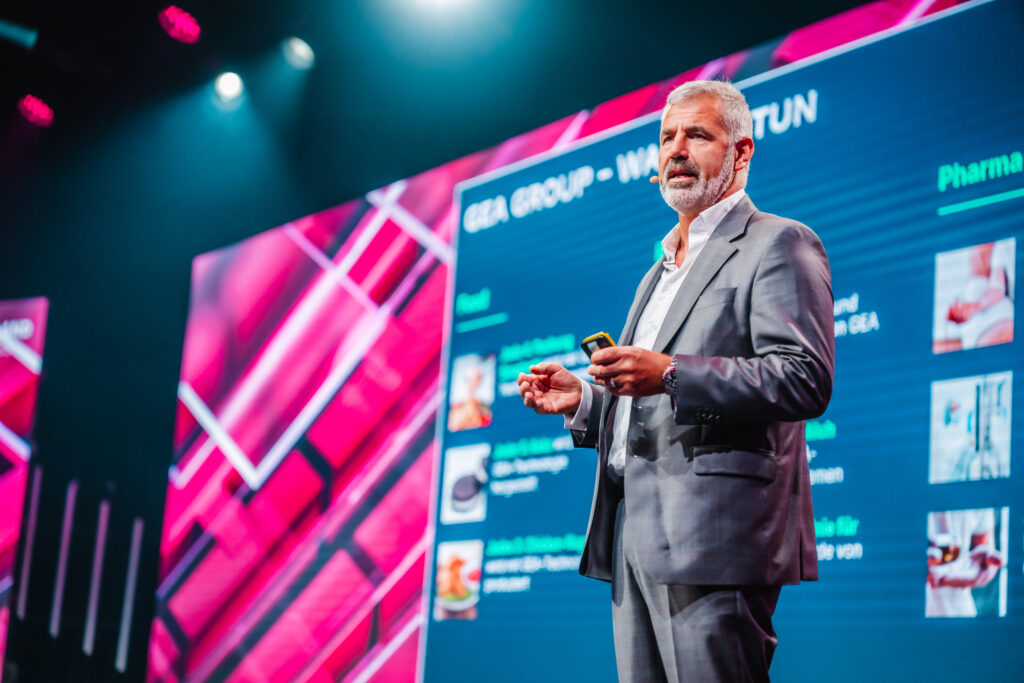
Stefan Klebert, CEO of GEA—a company that worked its way up to the DAX after seven consecutive profit warnings—summed up his approach, which set the tone for the entire day: “You always have to ask yourself: What’s coming tomorrow, what’s coming the day after tomorrow, and what do I need to do? And then you have to be willing to just get things done quickly.”
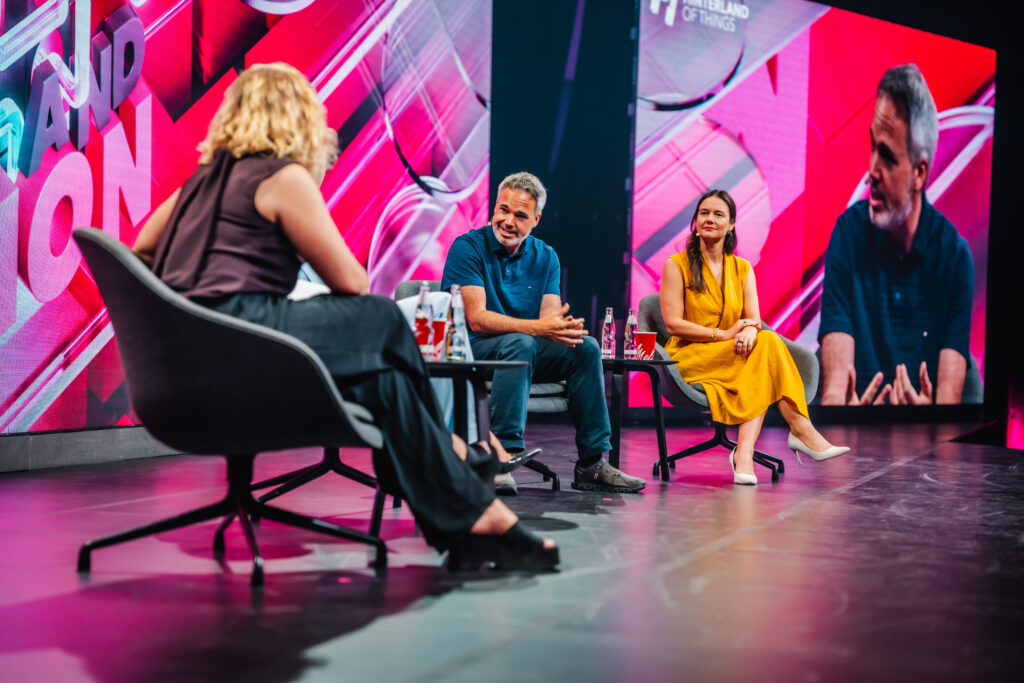
There was a consensus that Germany must return to a path of growth after years of recession and stagnation. The question was: Who needs to deliver—and how? In the panel discussion “The Growth Agenda,” Sigrid Nikutta, former head of Deutsche Bahn Cargo; Romy Schnelle from High-Tech Gründerfonds (HTGF); and Annika von Mutius from Empion joined Solveig Rathenow (Business Insider) to discuss the specific obstacles.
Nikutta’s assessment was clear: “I believe that our very restrictive regulatory framework, coupled with a certain lack of courage and a lack of trust—those are the biggest factors preventing us from growing.” Von Mutius, who serves on the advisory boards of both the Ministry of Economic Affairs and the Ministry of Digital Affairs, described the day-to-day reality of being a founder: “We face enormous bureaucratic hurdles. There are so many complex issues, but the real challenge from an entrepreneur’s perspective is the labor market and labor laws.”
Romy Schnelle from HTGF cited a sobering statistic: 50 percent of all funding in the High-Tech Gründerfonds portfolio—800 companies—comes from investors in the U.S. or Asia. Her call to action: “Germany could grow faster if we focused on what matters most, had less parochialism, worked together more, reduced bureaucracy, attracted more capital, and lowered energy costs.”
Capital was also the central theme of the panel “Where Capital Flows Next.” Investors Janna Ensthaler, known from the TV show “Die Höhle der Löwen,” Florian Heinemann from Project A, and Daria Saharova from the World Fund, together with Sarah Heuberger (Manager Magazin), analyzed the state of the European tech ecosystem. Ensthaler’s assessment was unambiguous: “Here, you can be a big fish in a small pond. In ’21, the European tech market was one-third the size of the American one; today, the European market is still only one-fifth. So in terms of size and momentum, we’re already falling far behind.” And regarding the societal dimension: “That’s a mistake, because we’re no longer creating the world’s future industries—all because of this penny-pinching mentality.”
Florian Heinemann articulated the strategic implication: “The illusion that we have a chance—so to speak—to defend ourselves there and somehow maintain our standard of living here without our own capabilities along the entire value chain—that, I believe, is naive.”
Thomas Rabe, CEO of Bertelsmann since 2012, shared insights in a conversation with Isabell Körner about his 15 years of leadership at a 190-year-old corporation. His core message was as simple as it was consistent: “Strategy is execution.” Transformation requires staying power: “You need that staying power when you’re operating in an entrepreneurial way. Things don’t happen overnight.” As part of the “Boost” program, Bertelsmann has invested over 10 billion euros in growth—and increased the share of U.S. revenue from 14 to 30 percent, according to Rabe.
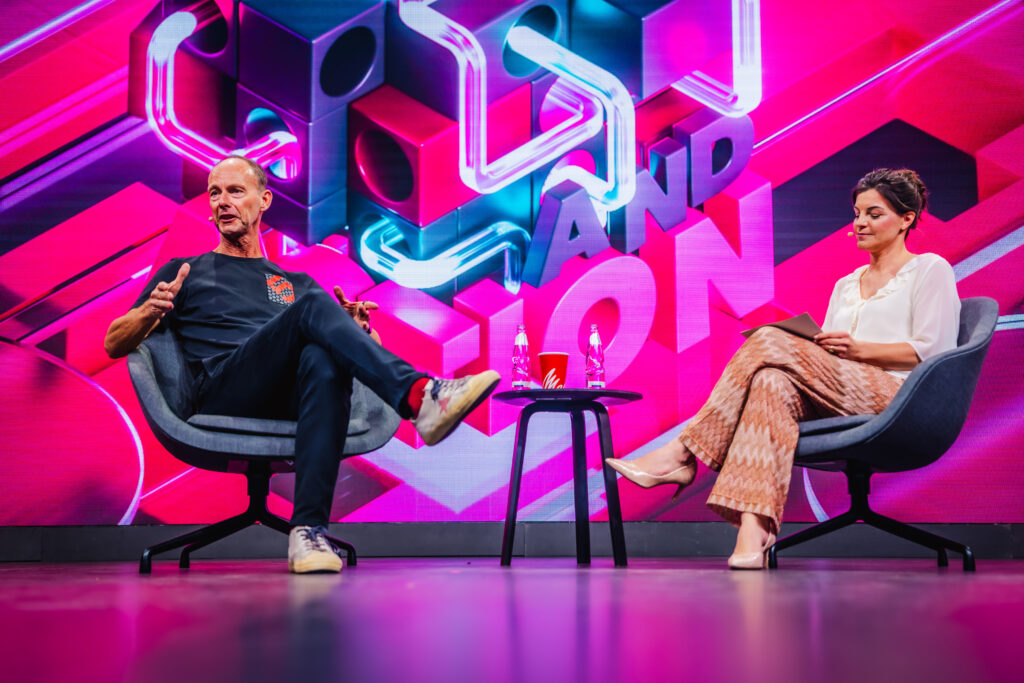
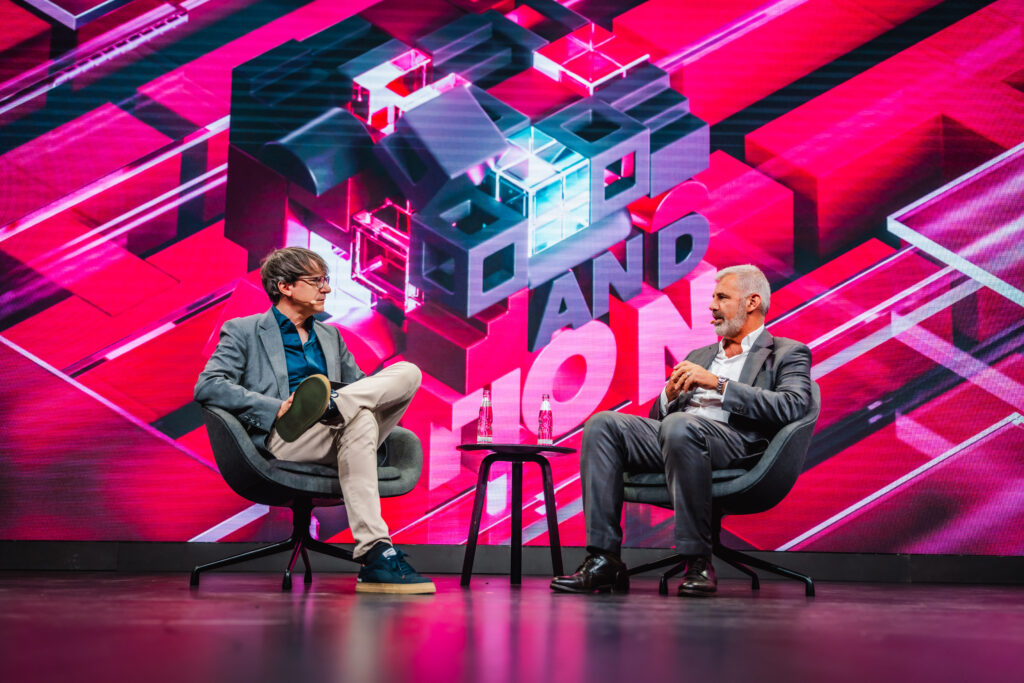
Using GEA as an example, Stefan Klebert illustrated what industrial transformation actually means: The company has already reduced its Scope 1 and Scope 2 emissions by 260 percent compared to 2019 and is currently investing about three times its depreciation expenses, according to Klebert. “A company cannot be a family. A company is obligated to deliver top performance, and only when a company delivers top performance will it survive and remain viable.”
As a conference that deliberately positioned itself “at the heart of Germany’s SME sector,” collaboration between startups and established companies was a key topic—and showed real progress compared to previous years: “Whether” is no longer the question, but rather “how.”
Carsten Maschmeyer, who has invested in over 150 technology startups through his venture capital funds, summed up the dynamic succinctly: “Startups and SMEs are a better fit than large corporations and startups.” And regarding the pace required: “The global currency of the future in the economy is speed.”
Eduard Richard Dörrenberg, managing director of the Dr. Wolff Group, demonstrated what this looks like in practice during his keynote address. The Bielefeld-based family-owned company has already deeply integrated AI into its marketing processes: “The [TV] commercial is entirely AI-generated. It was produced in one week, at roughly one-fifth to one-tenth of the normal cost,” said Dörrenberg. The vision behind this is clear: “We have a clear vision that we will become a real-time, data-driven company relatively quickly.” In the subsequent panel discussion, “Beyond the Buzzword,” Dörrenberg joined Tobias Kemkes, founder of Langdock; Dennis Cutraro, founder of Unfuture; and Maximilian Sachse (FAZ) to discuss their specific partnership, joint projects, and how AI is actually being implemented in small and medium-sized enterprises—from concrete use cases and organizational prerequisites to the biggest practical hurdles.
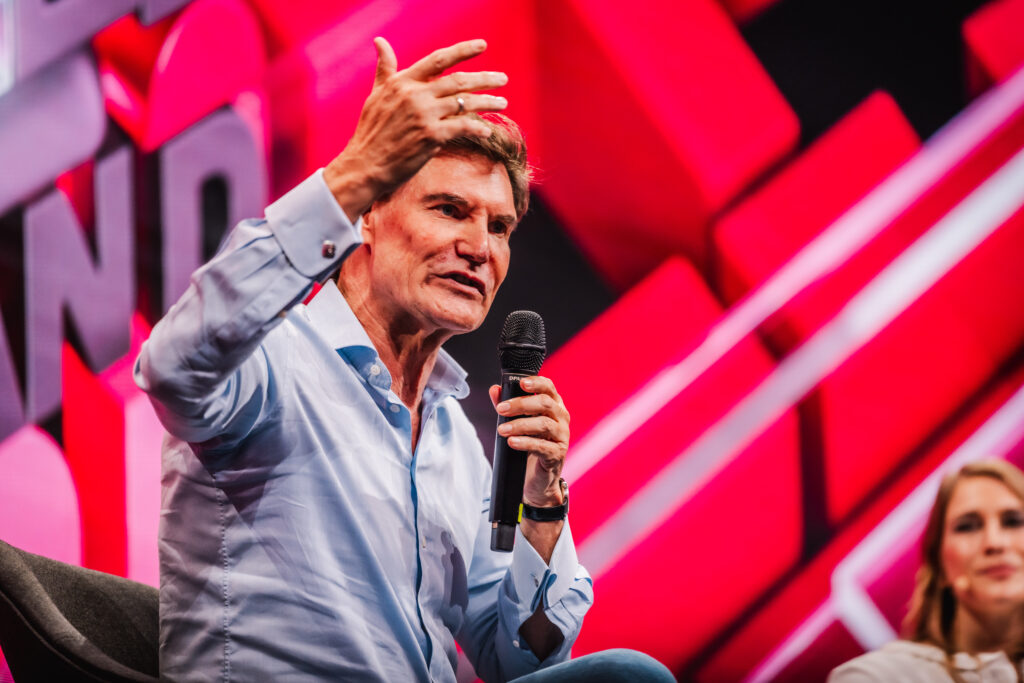
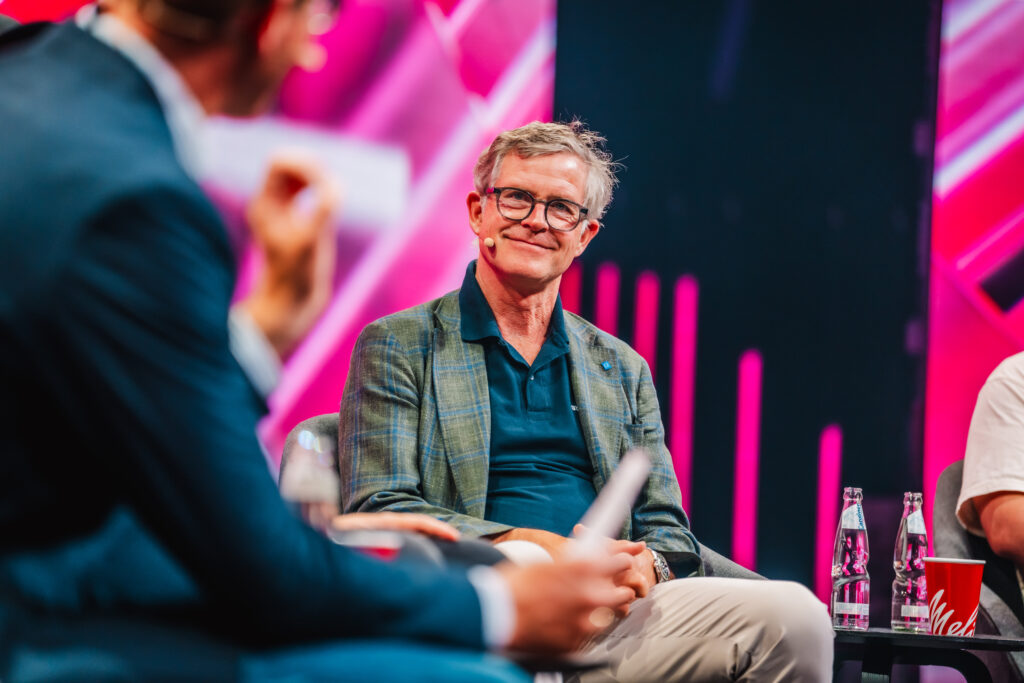
The Böllhoff Group provided another example during the panel discussion “Family Business, Startup Mindset” together with Thorsten Giersch (Markt & Mittelstand). The 150-year-old family business, led by Wilhelm Böllhoff, is focusing on what Rainer Berak of A11 calls “rekurbation”: disruptively reimagining its own business model before someone else does. With the spin-off of GetSpecialFastners GmbH, Böllhoff has created an agile unit that processes requests for specialty items—previously a process that took weeks—in just a few hours. Kevin Jostmeyer-Zelles, managing director of the new unit, summed up the logic behind it: “I’d also like to sell screws, but I’m taking a different approach to get there.” And Berak added a piece of advice that captures the mindset of the day: “Create your competitor’s worst nightmare.”
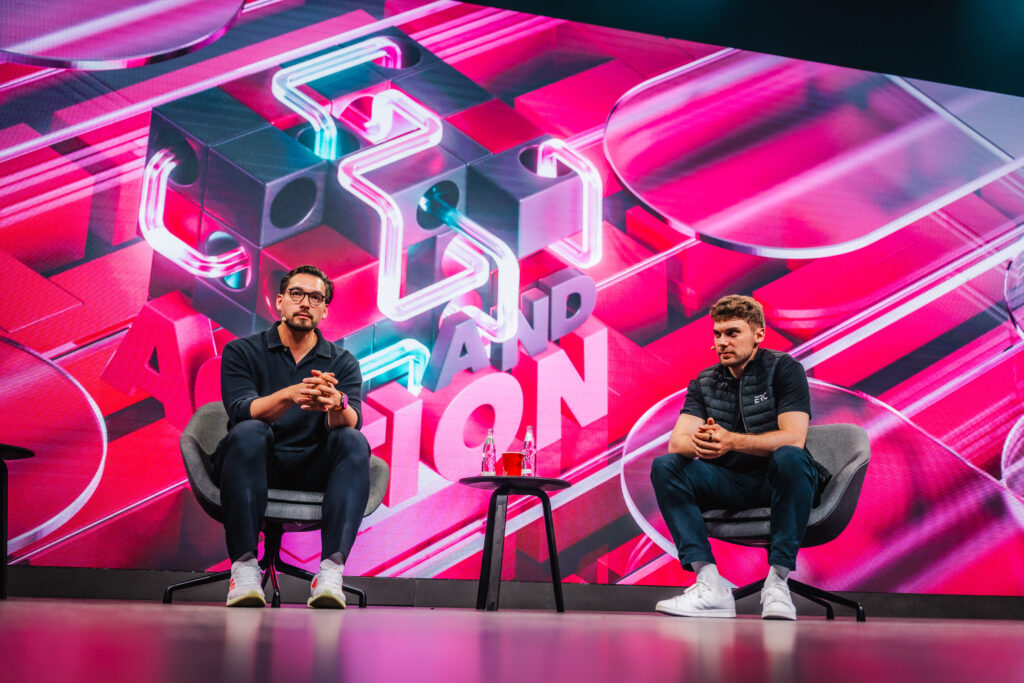
During the “DeepTech Breakthroughs” panel discussion, Maximilian Oligschläger of ERC Systems and Matthias Lehna of Quantum Systems, in conversation with Luca Carraciolo (t3n), made it clear that Europe’s next major companies will come from hardware, not software. Lehna’s assessment: “I believe AI has also shown that some business cases based solely on software simply don’t work anymore.” Oligschläger added a historical observation: “I don’t think there has been a single company in Europe over the past fifty years that was even close to being worth a hundred billion. And I believe that if we do have such companies, they will be in the deep tech sector.”
Quantum Systems expects revenue of 27 million euros this year, according to Lehna, and is producing 10,000 drones in Germany through its joint venture, Quantum Frontline Industries—an example of how the industrialization of research results is possible when the will is there.
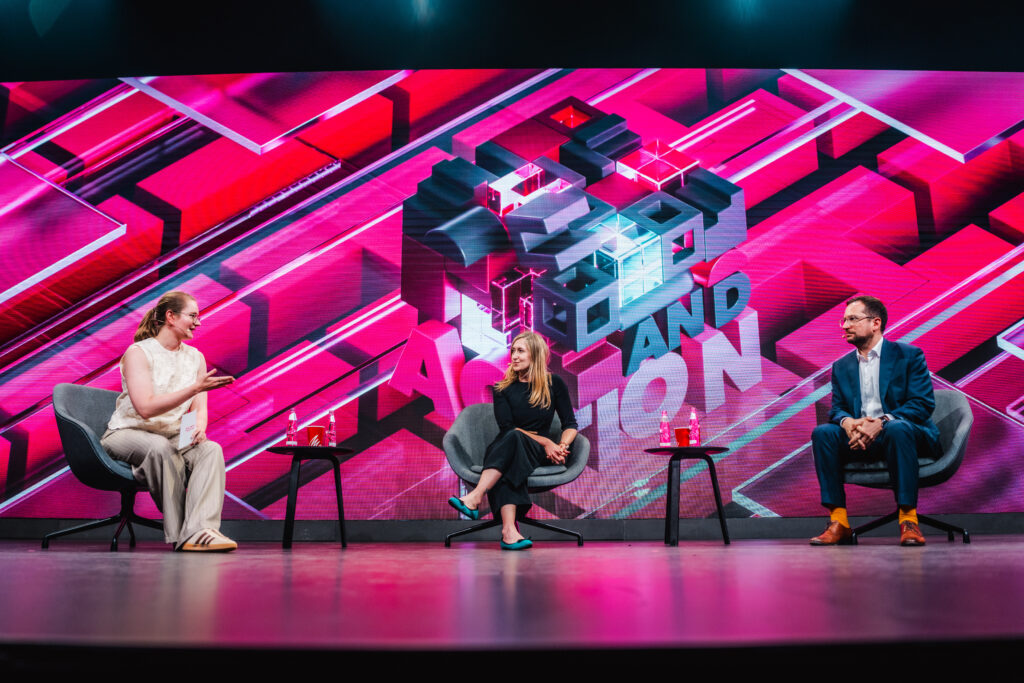
The panel “Financing Energy Sovereignty,” featuring Armin Reinartz of Proxima Fusion, Dr. Sarah Theinert of UVC Partners, and Frederike Holewik (Politico), highlighted just how deep the capital gap is for such projects. Theinert articulated the structural problem: “It’s not the science, it’s not the people doing the work—it’s the part of the supply chain that’s supposed to eventually finance growth. And that’s where we have a problem, because in the end an American or Chinese investor steps in, since we’re not able to mobilize enough growth capital.” Reinartz summed up the strategic dimension for himself: “If Germany wants affordable baseload power that always works—whether the sun is shining or the Strait of Hormuz is closed—then fusion is the only viable alternative.”
Ulrich Prediger, founder of JobRad—a company that has redefined the bicycle industry—wrapped up the Hinterland Stage. Prediger, who is currently launching his next venture, was convinced: “For the first time, we as founders have the opportunity to scale not through people, but through AI. And existing companies can’t do that—for data protection reasons, compliance, and who knows what else. But as a startup, without all that legacy baggage, I have an incredible opportunity to do a whole lot with AI—and you should take advantage of that.”
His advice to founders: “You have to be 100% convinced. You actually have to be a little naive, because otherwise you won’t take the risk.”
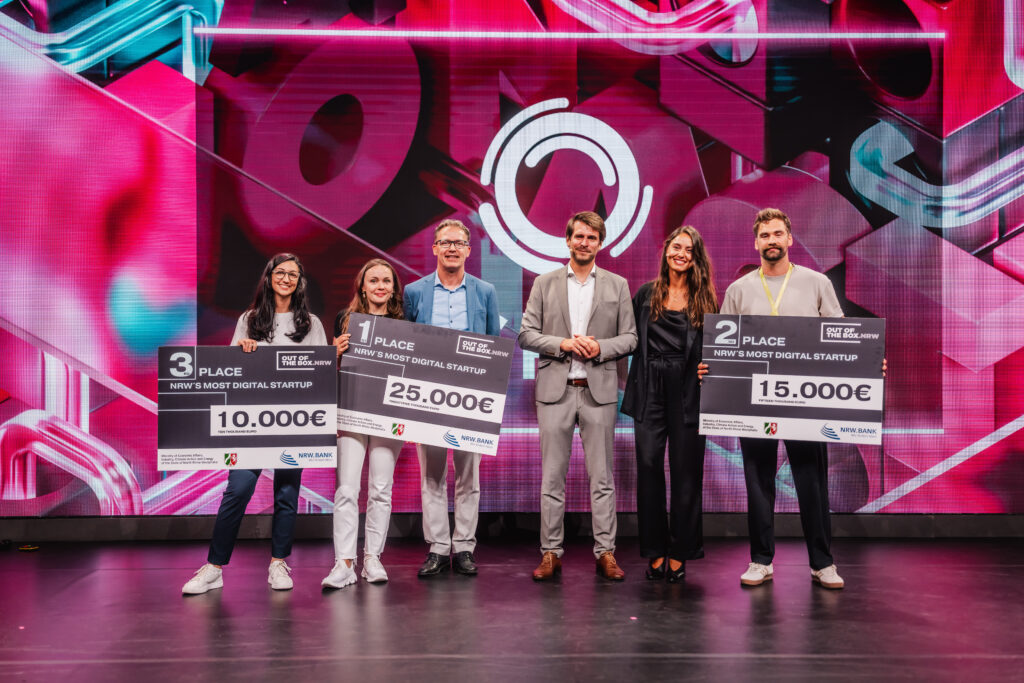
For the third time, the OUT OF THE BOX.NRW Award—initiated by the NRW Ministry of Economic Affairs—held its finals on the Hinterland Stage. The award honors the most innovative digital startups from North Rhine-Westphalia and is endowed with 50,000 euros by NRW.BANK. From numerous applications across all of North Rhine-Westphalia, the TOP26 were first selected, followed by the TOP10, who pitched live to the jury and audience in the finals.
Osphim took first place with an AI-powered solution for plastics manufacturing: The startup uses AI to stabilize manufacturing processes, thereby reducing scrap, material consumption, and reliance on manual expertise. Second place went to Kaarlo, which makes psychosomatic care digital, scalable, and yet human-centered—thereby addressing one of the most pressing gaps in the German healthcare system. Third place went to ForesAIght, which is building Europe’s “invisible” AI forecasting intelligence and transforming uncertainty into real-time decisions along supply chains.
“North Rhine-Westphalia is a hub for startups—and that’s a reason to celebrate! Digital solutions and artificial intelligence are not ends in themselves: When implemented correctly, they can make our everyday lives more sustainable, simpler, and better. The startups at OUT OF THE BOX.NRW are showing how this can be achieved—with creative business ideas, bold decisions, and a commitment to actively shaping the future of our state. The competition highlights the enormous creative potential in NRW—a real asset for a competitive and resilient economy. Congratulations to all the winning teams,” said Deputy Minister-President and NRW Minister of Economic Affairs Mona Neubaur.
Dominik Gross, Managing Director of the Founders Foundation and host of the conference, summed up the spirit of the day: “The 8th Hinterland of Things has shown that Germany and Europe know the answers. What matters now is the courage to put them into practice.”
The next Hinterland of Things conference will take place on June 10, 2027.
Anna-Luisa Korte
Director Brand & Content
Founders Foundation gGmbH
anna@foundersfoundation.de